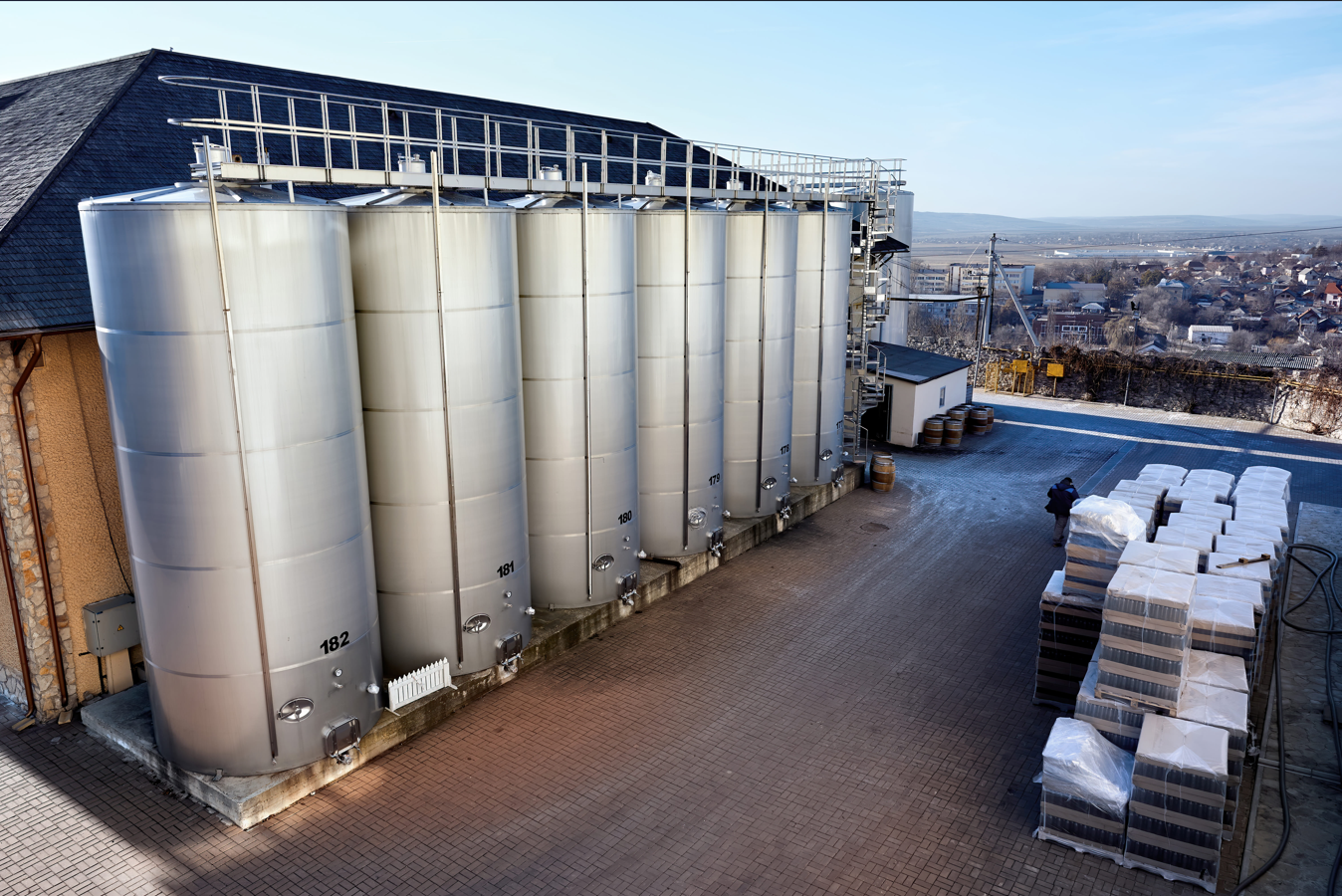
Walk onto any modern production floor, a pharma plant in Pune, a distillery in Maharashtra’s sugar belt, or a chemical unit exporting to the Middle East, and you’ll notice the same thing: fewer people standing at control panels, more systems quietly doing the watching, adjusting, and reporting for them.
That shift is industrial automation at work. And for plant owners evaluating their next upgrade, the real question isn’t whether to automate anymore. It’s which type of industrial automation solution fits their process, and who can deliver it reliably.
This guide breaks down what industrial automation solutions actually are, the types available, their real-world benefits, and a practical framework for choosing the right automation partner, written from the vantage point of DiTAP-V, an EPC company that has executed turnkey automation projects across pharma, chemicals, food & beverage, cement, sugar, oil & gas, and renewable energy sectors in 20+ countries.
What Is Industrial Automation?
Industrial automation is the use of control systems, PLCs, DCS, SCADA, sensors, and software, to operate machinery and industrial processes with minimal manual intervention. Instead of an operator manually adjusting valves, monitoring temperatures, or logging batch data, an automated system does it continuously, consistently, and in real time.
At its core, industrial process automation replaces repetitive, error-prone manual tasks with programmed logic and instrumentation. This isn’t limited to large assembly lines. Today, even mid-sized chemical, food, and water treatment plants rely on automation for process stability, compliance, and energy efficiency.
In short: industrial automation solutions combine hardware (PLCs, DCS, instrumentation, electrical panels) and software (SCADA, MES, batch control) to run a plant safer, faster, and more predictably than manual operations ever could.
Types of Industrial Automation Solutions
Not every plant needs the same kind of automation. The right type depends on production volume, product variability, and safety requirements. Broadly, industrial automation solutions fall into four categories.
1. Fixed Automation
Fixed (or “hard”) automation is built for high-volume, repetitive tasks that rarely change, think bottling lines or bulk material handling. It’s fast and cost-efficient at scale but difficult to reconfigure once installed.
2. Programmable Automation
Programmable automation, typically built around PLCs, allows the system to be reprogrammed for different products or batches. This suits industries like food & beverage and pharma, where formulations or batch sizes change periodically but production still runs in defined cycles.
3. Flexible (Soft) Automation
Flexible automation adapts on the fly, using PLCs, robotics, and dynamic control logic to handle varying product specifications without major reconfiguration. It’s common in textile, specialty chemical, and multi-product manufacturing environments.
4. Integrated Automation
Integrated automation connects PLCs, DCS, SCADA, MES, and IIoT platforms into a single unified control architecture, often with SIL2/SIL3 safety layers for hazardous processes. This is the standard for large, continuous-process industries such as chemicals, oil & gas, cement, and biotech, where safety compliance and real-time visibility across the entire plant matter as much as output.
Comparison of Automation Types
| Type | Best For | Flexibility | Typical Industries | Investment Level |
|---|---|---|---|---|
| Fixed Automation | High-volume, repetitive tasks | Low | Bottling, bulk handling | Low–Medium |
| Programmable Automation | Batch production with periodic changeovers | Medium | Food & beverage, pharma | Medium |
| Flexible Automation | Variable product specifications | High | Textile, specialty chemicals | Medium–High |
| Integrated Automation | Continuous, safety-critical processes | High (system-wide) | Chemicals, oil & gas, cement, biotech | High |
Most industrial automation companies in India offer some combination of these, but very few execute them as a single turnkey EPC scope, from PLC/DCS/SIL design through field instrumentation, electrical panels, and commissioning. That end-to-end execution is where the real complexity, and the real value, lies.
Benefits of Industrial Automation Solutions
The advantages of industrial automation go well beyond “fewer people on the floor.” For plant owners, the return shows up across five areas.
- Consistency and quality: Automated systems hold process parameters, temperature, pressure, flow rate, steady across every batch, reducing variation that manual control can’t match.
- Higher uptime and productivity: Continuous, fatigue-free operation shortens cycle times and reduces unplanned stoppages.
- Regulatory compliance: For pharma, API, and food industries, automated batch records and GMP-compliant control systems (such as S88 batch programming) make audits and traceability far simpler.
- Improved safety: SIL2/SIL3-rated safety instrumented systems isolate hazardous processes automatically, protecting both personnel and equipment in chemical, oil & gas, and distillery operations.
- Data-driven decisions: SCADA and IIoT integration give plant managers real-time visibility, enabling predictive maintenance instead of reactive firefighting.
Together, these benefits explain why industrial automation adoption is accelerating across Indian manufacturing, not just in automotive, but increasingly in process industries like sugar, ethanol, cement, and water treatment.
How to Choose the Right Industrial Automation Solution
Selecting an automation solution, and the company that delivers it, is a decision that affects plant performance for the next decade. Here’s what actually matters.
1. Match the Solution to Your Process, Not the Other Way Around
A distillery doesn’t need the same architecture as a discrete parts assembly line. Start with your process type (continuous vs. batch), production variability, and safety classification before selecting fixed, programmable, flexible, or integrated automation.
2. Look for Vertical-Specific Experience
Generic automation experience isn’t the same as having executed projects in your industry. A partner who has automated pharma clean rooms, sugar mills, and cement plants understands the compliance and process nuances that a purely product-focused vendor may not.
3. Check Certifications and Safety Compliance
For hazardous or regulated processes, confirm the provider works to recognized standards, IEC, CE, UL, GOST, CPRI, and has hands-on experience with SIL2/SIL3 safety systems, not just standard PLC programming.
4. Evaluate End-to-End EPC Capability
Ask whether the company handles the full scope, design, field instrumentation, electrical panels, PLC/DCS programming, and commissioning, or whether you’ll need to coordinate multiple vendors. Turnkey EPC execution reduces integration risk and project timelines significantly.
5. Ask About Lifecycle Support
Automation doesn’t end at commissioning. Look for providers offering AMC (Annual Maintenance Contracts), customer training, and DCS/legacy migration support, so your system stays reliable for years, not just at handover.
6. Review Track Record and Scale
Project scale matters. A company that has handled large I/O counts (tens of thousands of I/O points) across multi-country deployments has proven it can manage complexity, a meaningful signal for large or expanding facilities.
DiTAP-V’s Perspective: Automation as an EPC Discipline, Not Just a Product
At DiTAP-V, we’ve seen plant owners get automation half-right too often, a well-specified PLC system paired with mismatched instrumentation, or a DCS platform installed without the safety layer the process actually needs. That’s usually what happens when automation is treated as a product purchase instead of an engineering discipline.
Our approach, built over decades of executing turnkey automation, field instrumentation, electrical panel, and SIL2/SIL3 control system projects across biotech & pharma, chemicals, food & dairy, cement, sugar & ethanol, renewable energy, and water treatment industries, is different: automation is designed around the process first, then engineered, procured, and commissioned as one coordinated scope, not stitched together from separate vendors.
That’s also why our clients, from chemical manufacturers to steel producers managing systems with over 32,000 I/Os, come back for AMC and training support long after commissioning. Reliable automation isn’t a one-time installation. It’s a long-term operational partnership.
Frequently Asked Questions
What is the difference between industrial automation and industrial process automation? Industrial automation is the broader term covering any use of control systems to reduce manual work. Industrial process automation specifically refers to automating continuous or batch production processes, such as chemical reactions, distillation, or bottling, using PLC, DCS, and SCADA systems.
Which type of industrial automation is best for a chemical or pharma plant? Integrated automation, typically with SIL2/SIL3 safety systems, is generally best for chemical, API, and pharma plants because these processes are continuous, safety-critical, and heavily regulated.
How do I choose the best industrial automation company in India? Prioritize vertical experience in your specific industry, recognized safety and quality certifications (IEC, CE, UL, GOST, CPRI), end-to-end EPC capability, and proven large-scale project execution, rather than choosing based on product brand alone.
Is industrial automation only for large manufacturers? No. While large continuous-process plants gain the most from integrated automation, mid-sized manufacturers in food, dairy, and specialty chemicals increasingly use programmable and flexible automation to stay competitive.